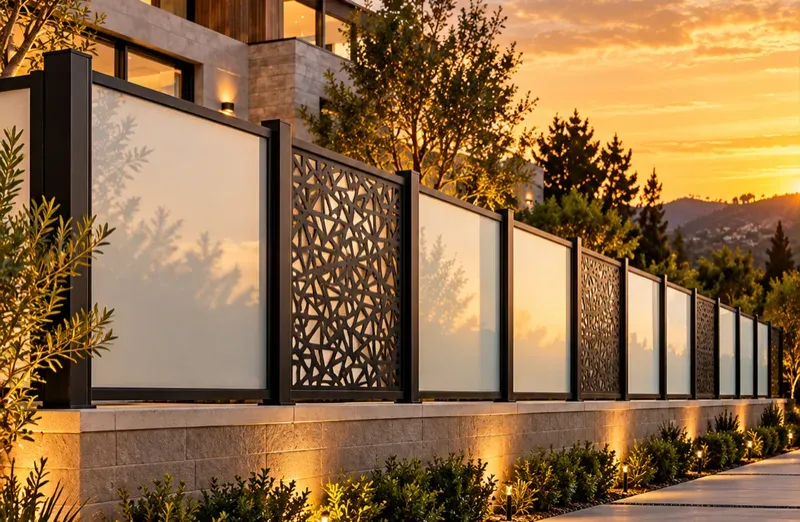
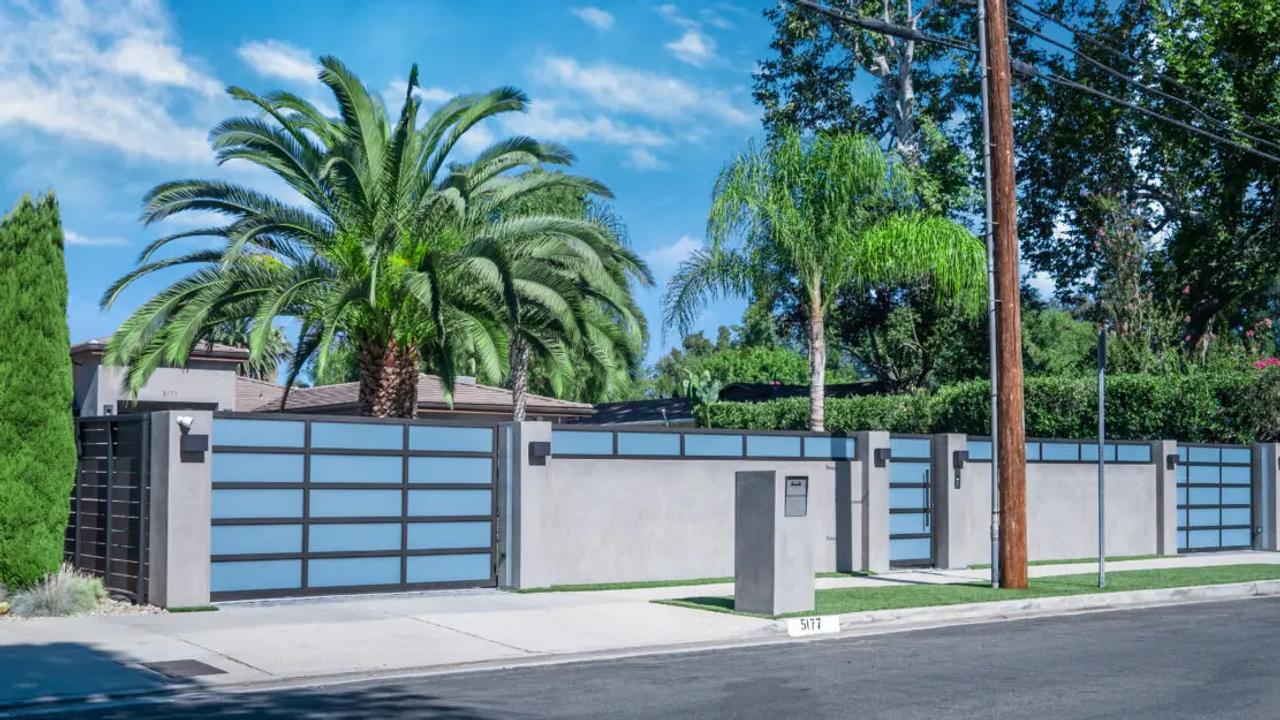
Mulholland Brand designs, fabricates and installs community entry gates and matching perimeter fencing for HOAs and property managers across Orange County. Two things make it a practical fit for an association. The gates and the fence come out of the same factory in Canoga Park, powder-coated to the association's approved color, with a profile chosen to sit within the existing scheme. And the whole job arrives on a single itemized quote in writing, installed by Mulholland's own W-2 crews rather than subcontractors. Mulholland has worked in Southern California since 1994 and holds California contractor license CSLB #1061373.
HOAs are one of the groups Mulholland builds for, alongside homeowners, architects, builders and developers. The full product range is on the gates and fences page.
What does a board need before it can approve a gate and fence project?
Boards rarely approve a picture. They approve a scope and a number, and they want to know the new work will look like it belongs.
In practice that means a few documents:
- A written, itemized quote that separates gates, fencing, gate automation and access control, so members can see where the money goes.
- The powder-coat color, stated as a match to the association's approved color.
- The profile of the fence and gates, and how it fits the existing look.
- The contractor's license number, which anyone on the board can check on the CSLB website.
Mulholland's process ends with a clear, itemized quote in writing. One document covers the whole scope, so the board is not trying to reconcile a gate bid from one company with a fence bid from another.
How do you match new gates and fencing to the community's existing look?
Color comes first. Mulholland powder-coats to the association's approved color, so a new entry gate and a new run of fence finish the same.
Profile comes second. Orange County communities vary. Around Newport and Laguna the style tends to run modern, while many older inland neighborhoods run traditional. Mulholland's fencing covers that range, from horizontal-slat and frameless modern profiles through traditional spear-top picket, and it chooses a profile that sits within the scheme already on the ground.
Some communities want an entry with its own identity. Laser-cut aluminum panels with a custom pattern are an option for that, through Mulholland's specialty aluminum work. Others prefer the warmth of timber without the upkeep, and wood-look powder-coated finishes cover that.
Because the gates and fencing are built in-house together, the walk gates at the pool or the clubhouse can be matched to the vehicle gate series at the entrance.
Which entry gate suits a community entrance?
It depends on the space at the entry and how the traffic moves.
- Sliding gates work where there is room along the fence line for the gate to travel.
- Swing gates suit entries with clear space in front or behind for the leaves to open.
- Overhead gates are an option where neither of those fits.
- Barrier-arm gates handle frequent vehicle traffic where a full gate is not needed.
Mulholland motorizes the gates it builds, with gate motors, openers, safety sensors and exit loops. For access, options include keypads, smart locks, fingerprint locks and car-integrated openers. Gates can also be prepared for an intercom system. If the association already works with an intercom or telephone-entry provider, Mulholland prepares the gate for it and that provider handles the system itself.
Weight matters on a community gate that cycles all day. Aluminum weighs a fraction of iron at the same span, which is easier on hinges, posts and gate operators. The driveway and entry gates page shows the design series, and this post on gates for HOAs and condos goes further into access for shared entries.
What about long perimeter runs, slopes and pool areas?
Perimeter fencing is where an HOA project gets long. Grade changes along the way are common, and a fence that ignores them looks wrong fast. Mulholland engineers fencing to the slope, with runs either stepped or raked to follow the grade.
Community pools bring their own rules. Mulholland builds pool fencing with code spacing and self-closing gates, as well as full pool enclosures. It also builds aluminum equipment enclosures to screen pool equipment and HVAC units.
Where the community already has block or stucco walls, aluminum wall toppers can add height and privacy without tearing the wall out. See the fencing page for the full set of profiles.
Why aluminum instead of iron or wood for an association?
Maintenance is a line item in the reserve study, and aluminum shrinks it. Powder-coated aluminum does not rust, rot or need repainting, and Mulholland states its finish lasts 30+ years in the Southern California sun. Near the coast that matters more, since salt air is hard on iron.
Aluminum is also non-combustible and CAL FIRE tested.
Iron still has a place. If the board is replacing one short stretch inside a long existing iron run and wants the new section to match the old metal exactly, patching in iron may be the simpler answer. Wood can suit a community that wants real timber and budgets for regular refinishing. For a full gate and perimeter replacement, though, aluminum is usually the lower-upkeep choice.
How does the project run for a board or management company?
- Site consultation. Mulholland comes to the property. No showroom visit is needed.
- Measurement. The team measures every run and checks terrain and slope.
- Design and quote. You receive one clear, itemized price in writing for the full scope.
- Fabrication. Gates and fencing are built to spec in Mulholland's Canoga Park factory. Nothing is outsourced and nothing is off-the-shelf sizing.
- Installation. Mulholland's own crews install the work and finish with a walkthrough.
Board members who want to see how the work is made can tour the factory by appointment. Once the gates are in, Mulholland services the installations it built.
What should the board ask any contractor bidding the job?
These questions help compare bids fairly:
- Is the quote one itemized document covering gates, fence, automation and access control?
- Who fabricates the gates and fencing? In-house, or bought from a supplier?
- Who installs? The company's own employees, or subcontractors?
- What is the license number, and does it check out with the CSLB?
- How will the color be matched to our approved color?
- Can the vehicle gate, walk gates and fence all come from the same design series?
- Who services the gate operator after installation?
A contractor that builds and installs its own work can give a straight answer to each.
HOA gates and fencing FAQ
Can a property manager request the quote for the board?
Yes. Whoever manages the project can book the site consultation, and the itemized written quote is the document the board reviews.
Can the community gate work with an intercom or telephone entry?
Yes. Mulholland prepares its gates for an intercom system. Tell them at the consultation which entry system the association uses or plans to use, so the gate is built ready for it.
Will you repair our community's existing gates?
Mulholland's service and repair work covers gates and fencing it installed. It does not repair other companies' gates or fences.
Which areas do you cover?
All of Orange County, plus Los Angeles, Ventura and San Diego counties. See the Orange County service area page.
If your association in Orange County is planning new entry gates and matching fencing, Mulholland Brand can walk the property and put the full scope on one written quote for the board. Book a consultation or call (800) 562-5770.